> For the complete documentation index, see [llms.txt](https://mtrsolution.gitbook.io/eventic/llms.txt). Markdown versions of documentation pages are available by appending `.md` to page URLs; this page is available as [Markdown](https://mtrsolution.gitbook.io/eventic/venues/seating-plans.md).
# Seating Plans
As of V1.5, Eventic now includes a seating module which is composed of two parts:
1. For organizers: **Seating Plan Designer**
2. For attendees and POS: **Seats Selection**
## Seating Plan Designer
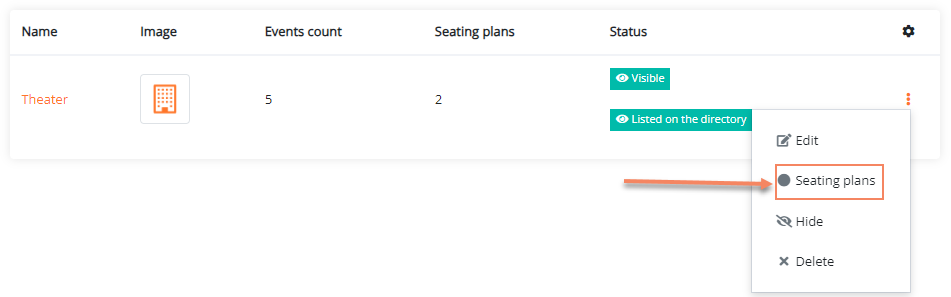
The seating plan designer allows organizers to create multiple seating plans for each venue. It is accessible after creating a venue:
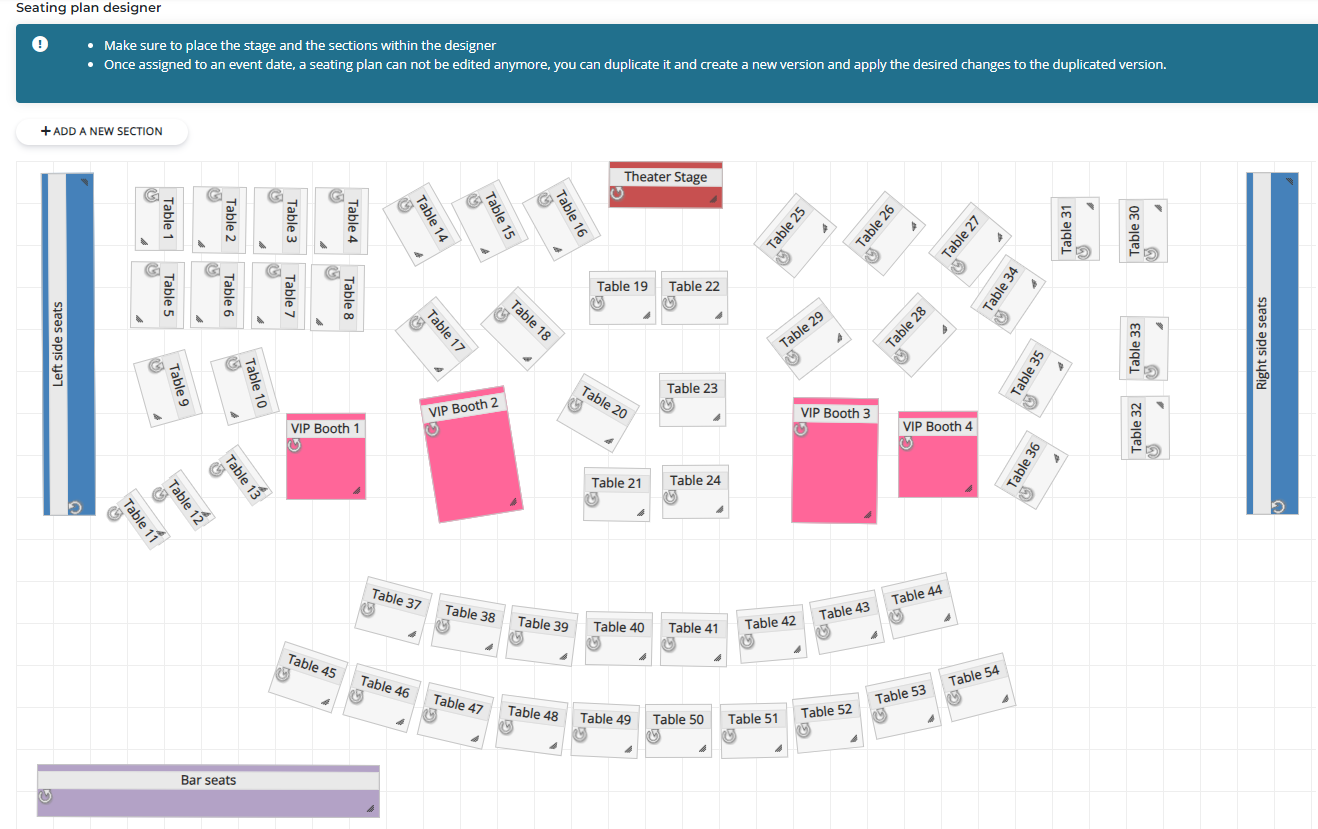
Click on "**Add a new seating plan**" to design a new seats layout for the venue. This will open the designer which allows you to enter **a name for the seating plan**, and then **design the seats layout**.
The seating plan within Eventic can be decomposed into the following components:
### **The stage**
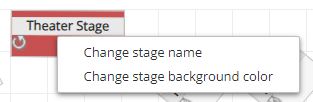
it will be the place where the event activity is displayed or performed. Within the designer, right click on the stage to change its:
* *Name;*
* *Background color;*
### **Sections**
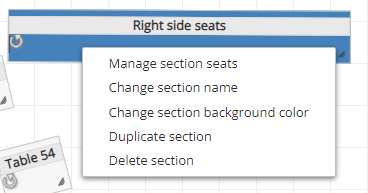
A section is a part of the seating plan, and it is composed it self by one or multiple rows. Each seating layout has to have at least one section besides the stage. Right click on a section to:
* *Change its **name**;*
* *Change its **background color**;*
* ***Duplicate** the section along with its rows and seats configuration;*
* ***Delete** it permenently;*
* ***Manage its rows and seats**;*
{% hint style="info" %}
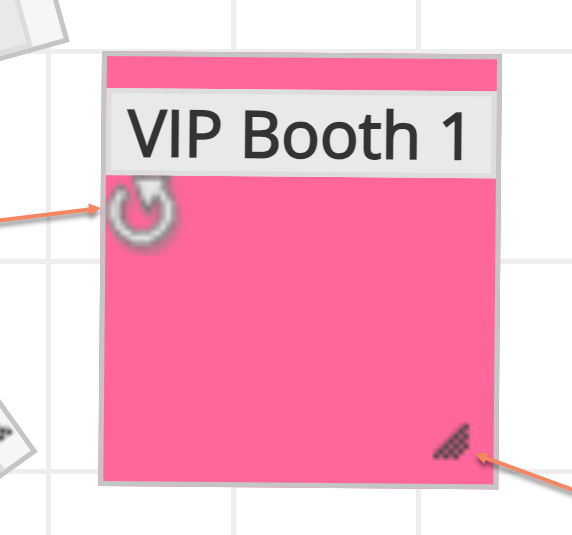
You can control the Stage and the Sections following parameters:
* Horizontal and vertical position by dragging
* Width and height by dragging the grisp icon
* Rotation angle by moving the rotate icon
{% endhint %}
### **Rows**
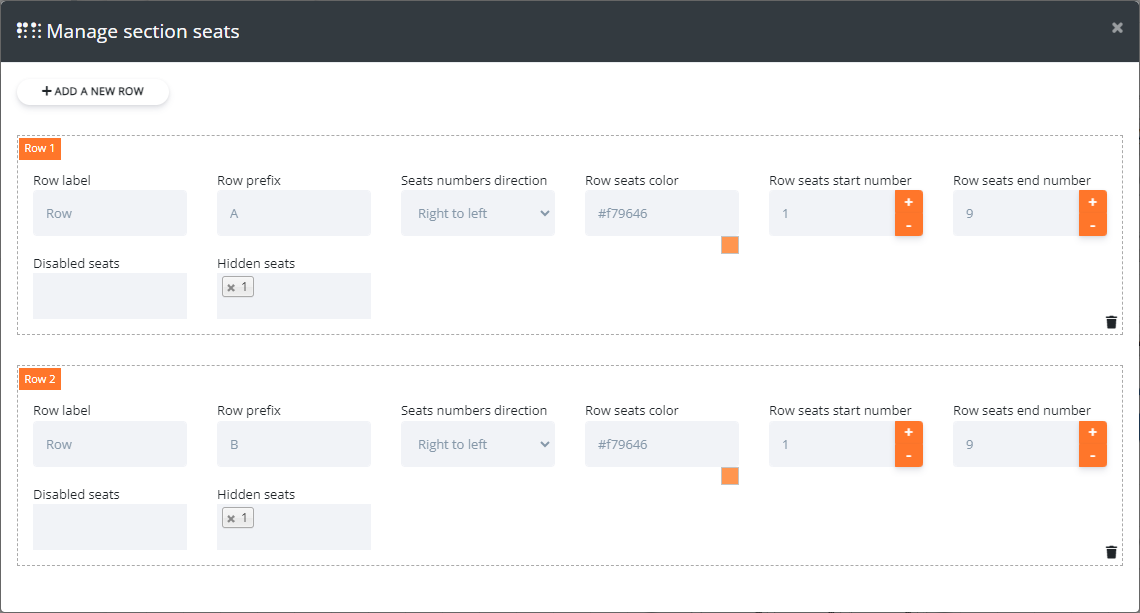
Each row has to be within a section and can be configured as follows:
* ***Label**:* the default row label is "Row", you can change it to whatever you like;
* ***Prefix***: the default row prefix is "A", you can change it to 1 or to another value of your choice;
* ***Seats numbers direction***: Left to right or Right to left, can be used choose the seats numbering direction (for example: 1..9 or 9..1.)
* ***Seats color***: change the background color of the seats shape (which is a small circle)
* ***Seats start and end numbers***: both fields can be configured to decide the seats numbers in the current (end number - start number - disabled seats count - hidden seats count + 1 = number of seats available for selection in the current row)
* ***Disabled seats***: within the generated seats from the start and end numbers range, you can disable a number of seats which will be visible but can't be booked by attendees (for various reasons like pre reserved seats)
* ***Hidden seats***: within the generated seats from the start and end number range, you can hide a number of seats which will not be visible in the seats selection area (can be usefull to style the seats layout exactly like your actual design)
{% hint style="info" %}
Click on the "Trash" icon to delete a row.
{% endhint %}
{% hint style="info" %}
When you add a new row, the system tries to fill in automatically the fields with values based on the previous row
{% endhint %}
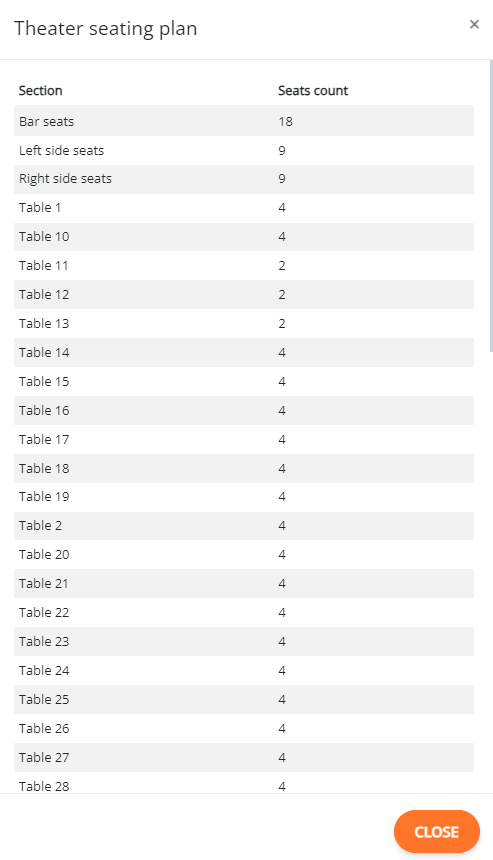
Once you click on "Save", you can check the generated seats count by clicking on details:
## Assigning a seating plan to a event
Once your seating plan layout is final, you can go to the add event form and select, please check below on how to:
[Select the seating plan in the event date form](/eventic/events/adding-a-new-event.md#does-this-event-date-has-a-seating-plan)
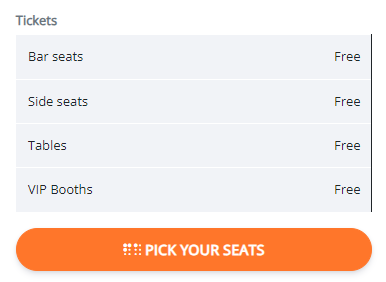
[Assign the created sections to different event tickets](/eventic/events/adding-a-new-event.md#seating-plan-sections)
{% hint style="info" %}
Once assigned to an event date, a seating plan layout can not be changed anymore. In which case, you can duplicate the seating plan and start making changes to the duplicated one.
{% endhint %}
## Booking seats by the attendees
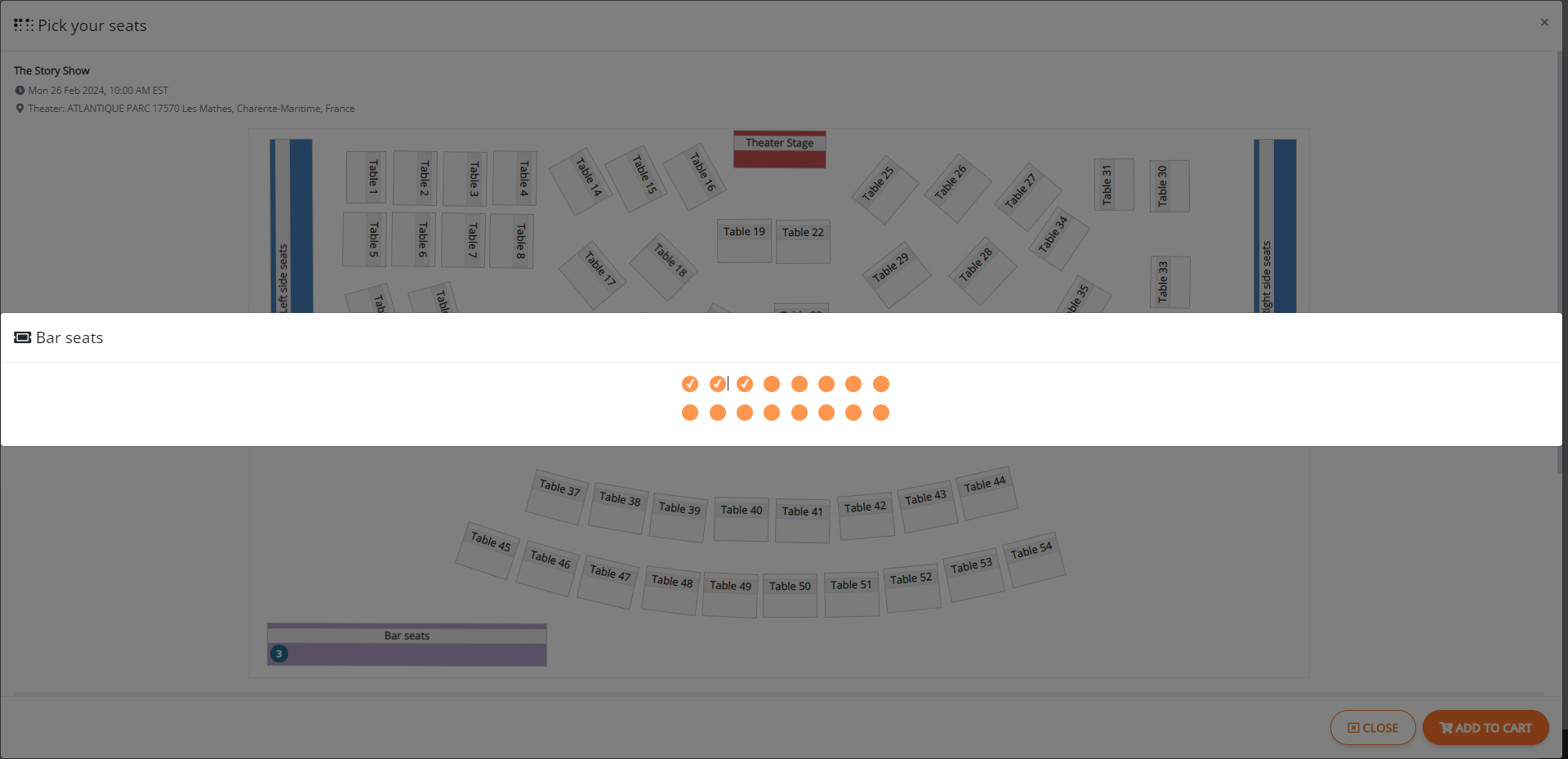
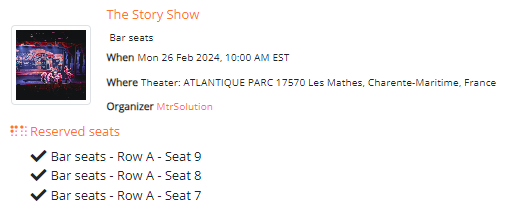
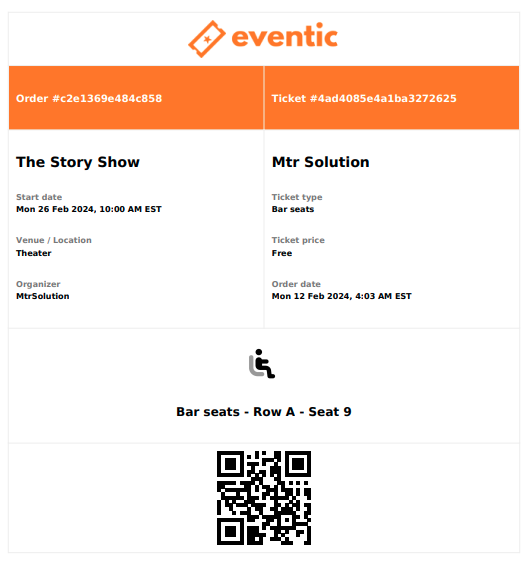
The attendees will be able to select seats from the layout you just created.
All the initial features that were integrated in Eventic like ticket sales dates interval, tickets limit per attendee.. were considered while developing the module.
 {% endhint %}
### **Rows**
Each row has to be within a section and can be configured as follows:
{% endhint %}
### **Rows**
Each row has to be within a section and can be configured as follows: